
Description
Product Overview
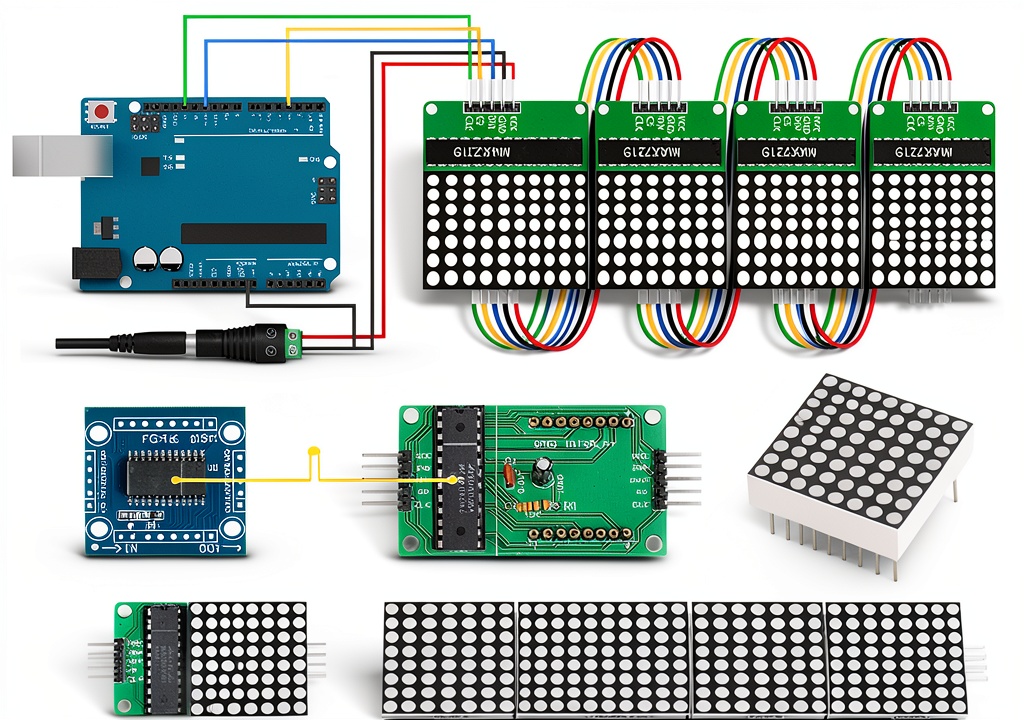
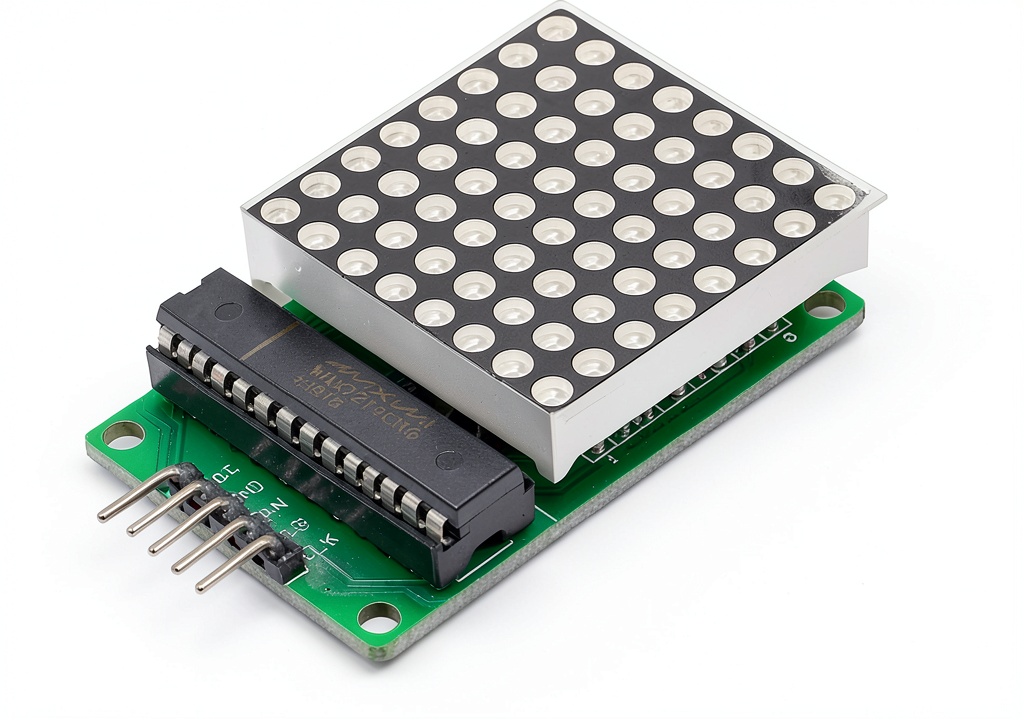
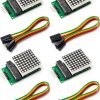
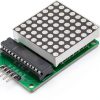
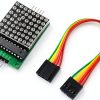
The MAX7219 8×8 LED dot matrix module from ALAMSCN is engineered to provide a versatile, high‑density visual output for a wide range of electronic projects. Measuring just 0.39 x 0.39 x 0.39 inches and weighing only 0.705 ounces, the module packs a full 64‑LED array into a compact footprint that can be seamlessly integrated into breadboards, custom PCBs, or prototype enclosures. The module utilizes the MAX7219 driver IC, which incorporates an 8‑bit static RAM, multiplex scan circuitry, and a BCD code‑B decoder, allowing each LED to be addressed individually without the need for complex external circuitry.
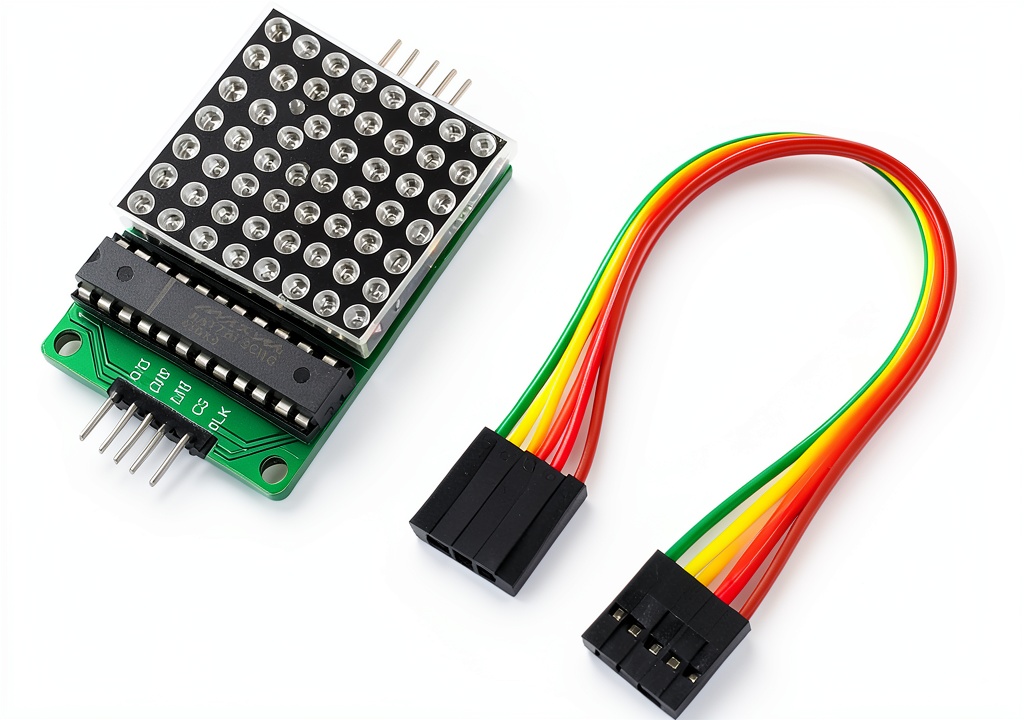
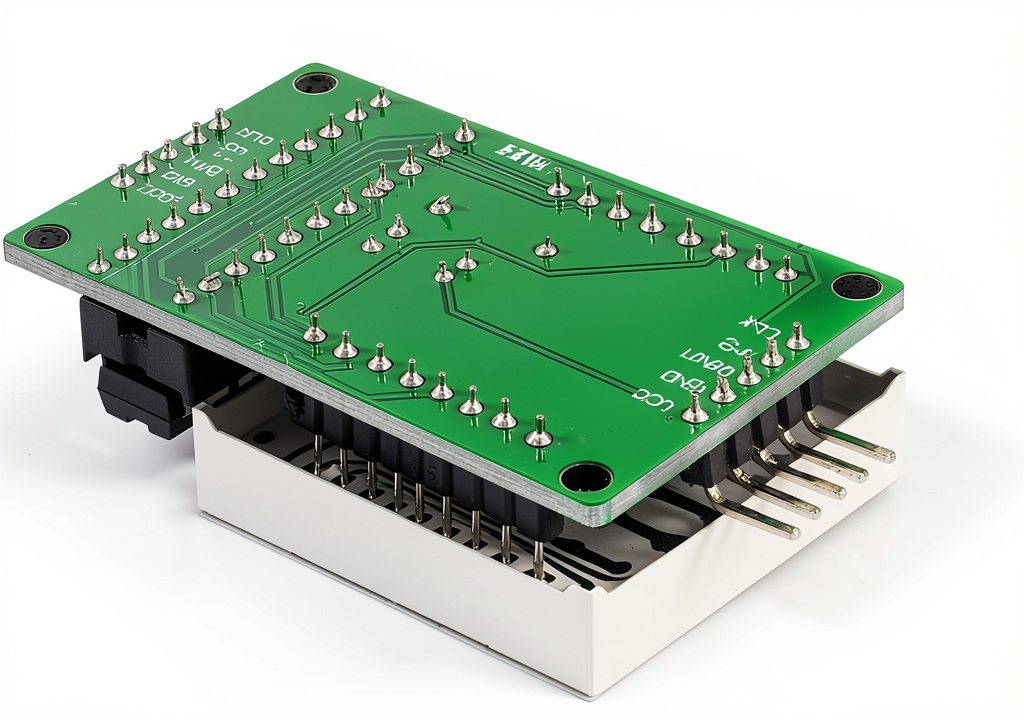
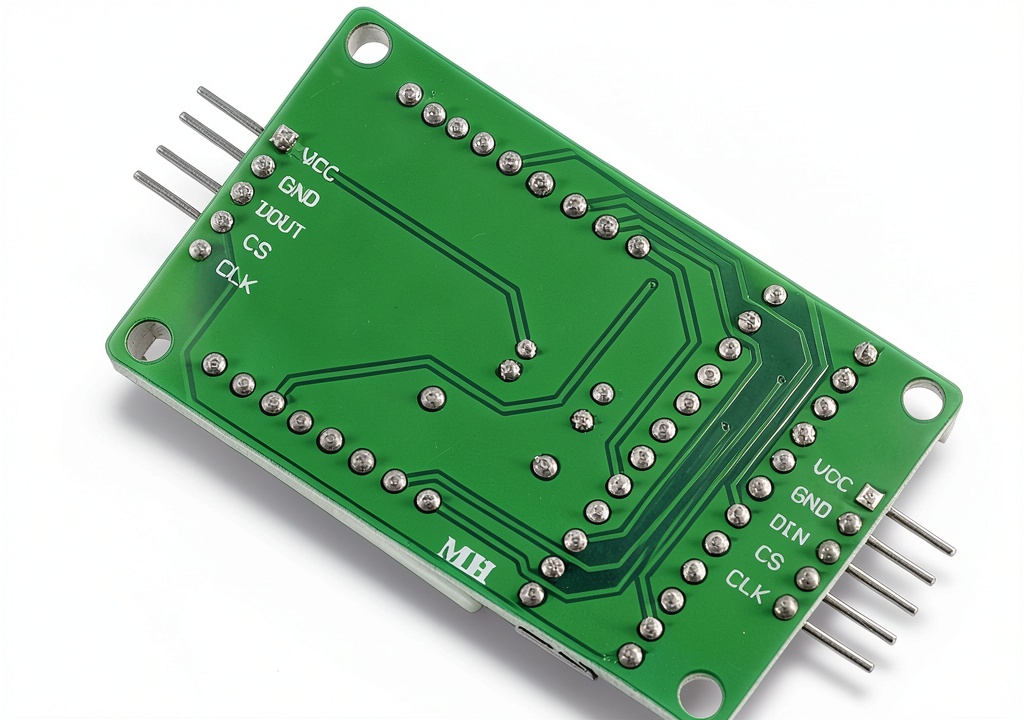
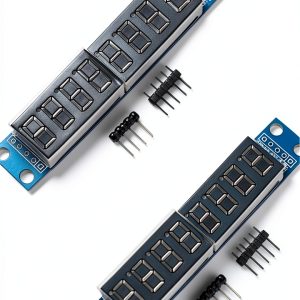
Key specifications include a common‑cathode LED configuration, a single external resistor for current setting, and a three‑wire serial interface (DIN, CLK, CS) that simplifies wiring to any microcontroller platform. The module supports brightness control via an internal PWM register, a low‑power shutdown mode that draws only 150 µA, and a test mode that can illuminate all LEDs for rapid diagnostics. The package includes four identical modules, each pre‑wired with a 5‑pin connector (VCC, GND, DIN, CLK, CS) to accelerate development time.
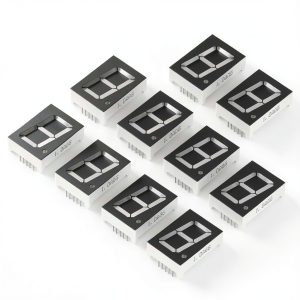
![[Product front view showing all components]](https://www.cityfresh.store/wp-content/uploads/2026/07/726fb467abaa43169ac9eeff4bcdf9ca.jpg)
Usage
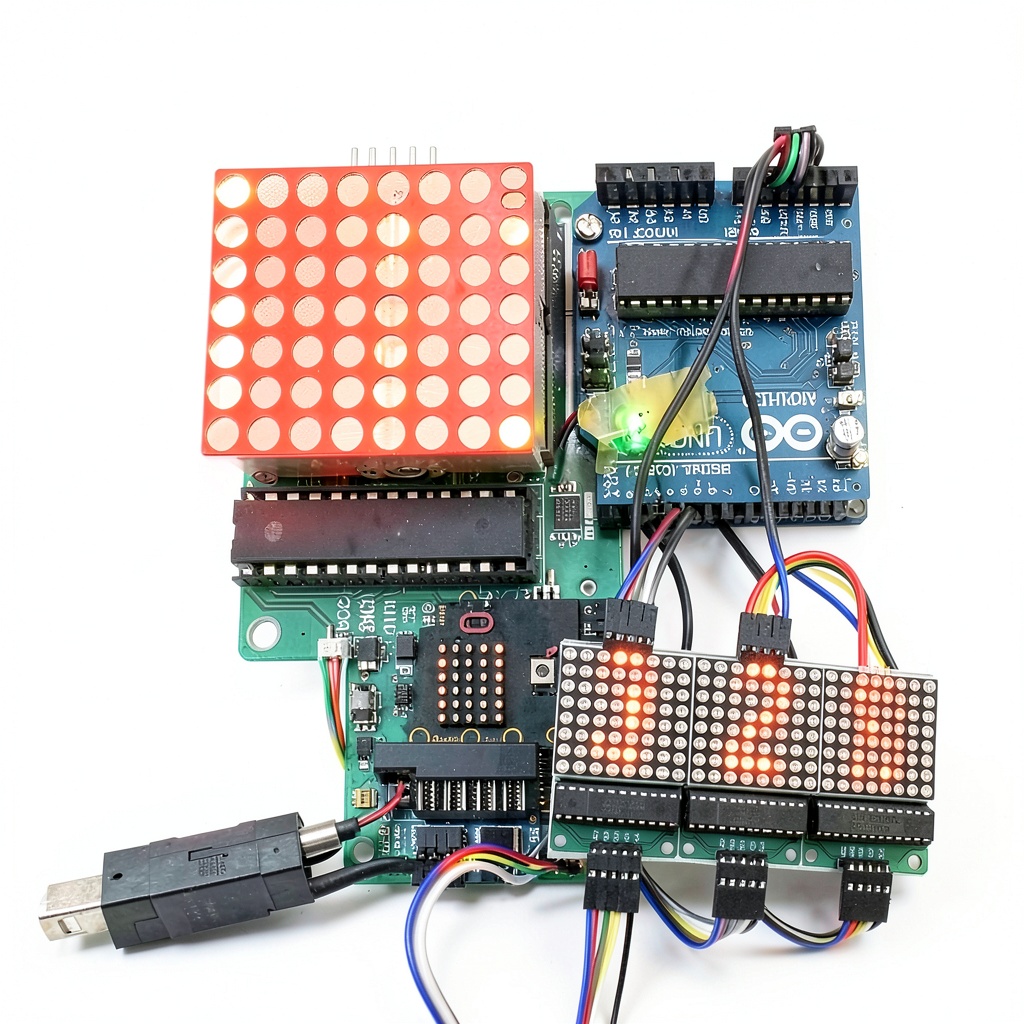
Designed for makers, educators, and engineers, this dot matrix display excels in applications where space is at a premium but visual impact is essential. Typical use cases include scrolling text banners for status indicators, animated icons for user interfaces, simple games such as Snake or Tetris, and educational demonstrations of binary counting or multiplexing techniques. Because the module communicates via a standard SPI‑compatible protocol, it can be driven by popular development boards such as Arduino Uno, Mega, Nano, as well as Raspberry Pi models, ESP32, and other 3.3 V or 5 V microcontrollers.
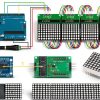
In hobbyist environments, the 5‑Pin wire set enables rapid prototyping: simply connect VCC to the board’s 5 V rail, GND to ground, and route the data, clock, and chip‑select lines to any available digital pins. The library support in the Arduino IDE and the Raspberry Pi’s Python ecosystem means that developers can start displaying custom patterns within minutes, using functions like setIntensity() for brightness adjustment or clearDisplay() for resetting the matrix. For industrial or research settings, the module’s low power consumption and robust driver IC make it suitable for battery‑operated devices, remote sensors, or embedded status panels.
Why Choose Us
ALAMSCN has a reputation for delivering reliable optoelectronic components, and this MAX7219 dot matrix module is no exception. Each unit undergoes rigorous quality testing, including LED uniformity checks, current regulation verification, and communication integrity validation, ensuring that the display performs consistently across the entire batch. The inclusion of a 5‑Pin wire harness reduces assembly errors and shortens time‑to‑market for developers who need a plug‑and‑play solution.
Beyond the hardware, ALAMSCN provides comprehensive documentation, example code, and responsive technical support. Whether you are a beginner learning to control LEDs or an experienced engineer integrating the module into a larger system, you can rely on detailed schematics, timing diagrams, and troubleshooting guides that accompany the product. The company also offers a flexible return policy and warranty coverage, reinforcing confidence in the durability and longevity of the display.
Furthermore, the module’s design emphasizes scalability. Because the MAX7219 driver can cascade up to eight devices, users can expand their visual output by chaining additional modules without redesigning the communication architecture. This scalability, combined with the module’s low cost—approximately $11.99 per pack of four—makes it an economical choice for projects that may grow in complexity over time.
Key Features
- Compact 8×8 LED matrix delivers high‑resolution visual output in a tiny footprint.
- Simple 5‑Pin wiring eliminates complex soldering and speeds up prototype assembly.
- Integrated brightness control and low‑power shutdown mode conserve energy for battery‑run designs.
- Compatible with Arduino, Raspberry Pi, ESP32, and other microcontrollers via standard SPI interface.
- ALAMSCN’s dedicated support and warranty ensure reliable performance and peace of mind.
FAQ
What voltage does the module operate at?
The MAX7219 module is designed for 5 V operation, but it can also function at 3.3 V when used with compatible microcontrollers, provided the external resistor is selected to match the lower voltage.
Can I chain multiple modules together?
Yes. The MAX7219 driver supports cascading up to eight modules on the same data, clock, and chip‑select lines, allowing you to create larger displays such as 16×8 or 32×8 matrices.
How do I adjust the brightness of the LEDs?
Brightness is controlled through the driver’s internal PWM register. In Arduino, the setIntensity() function accepts values from 0 (dim) to 15 (maximum brightness). The same principle applies to Raspberry Pi libraries.
Is the module suitable for outdoor use?
While the LEDs are bright, the module is not weather‑sealed. For outdoor applications, it should be enclosed in a protective housing that shields it from moisture and dust.
What is the purpose of the test mode?
Test mode forces all LEDs on simultaneously, which is useful for verifying that the module is correctly wired and that each LED is functional before deploying your custom patterns.

Reviews
There are no reviews yet.