
Description
Product Overview
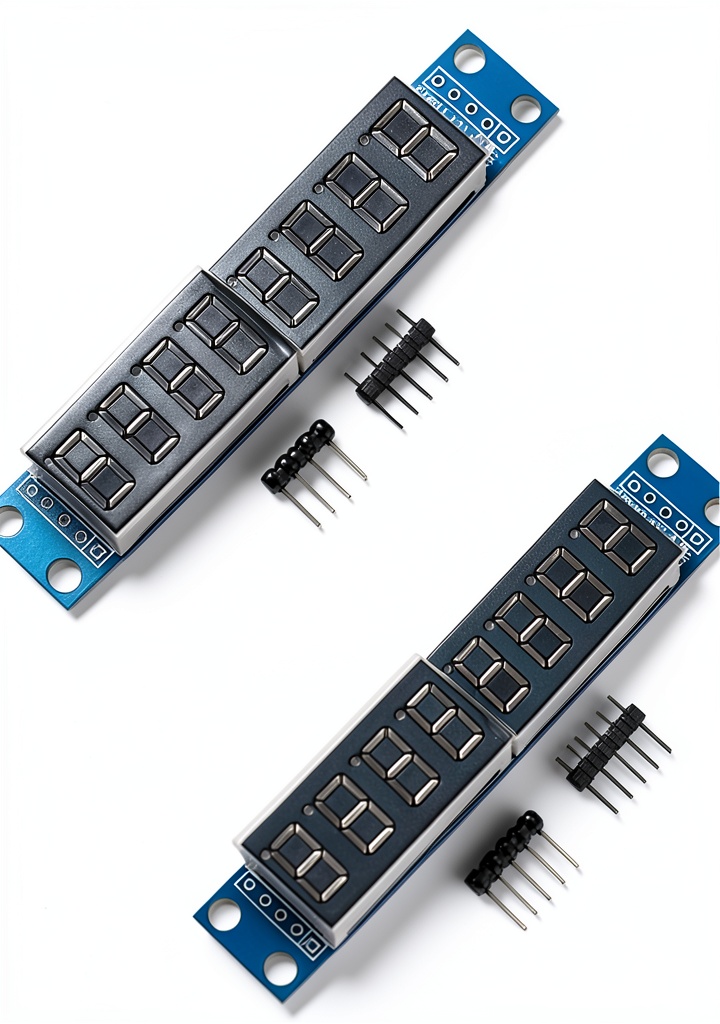
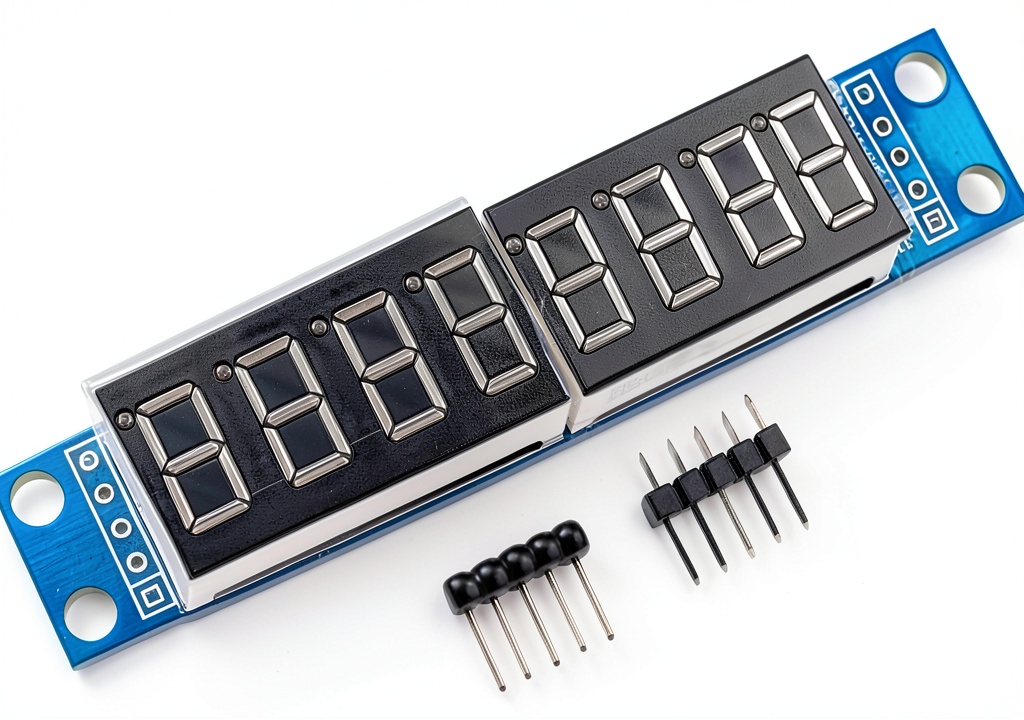
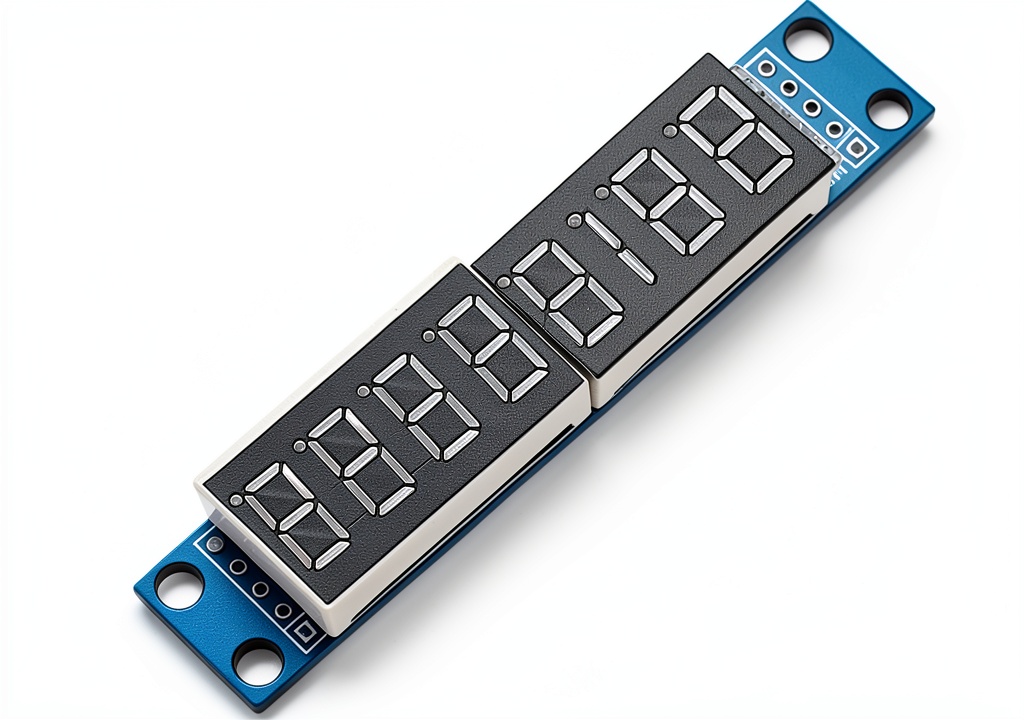
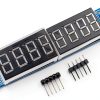
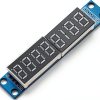
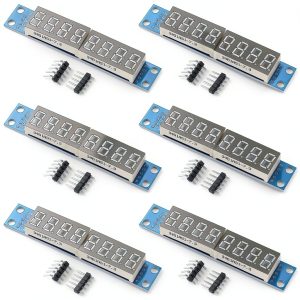
The HiLetgo MAX7219 8‑digit LED segment display tube is engineered for developers who need a compact yet powerful visual output component. Each digit measures 0.36 inches, delivering crisp numeric or alphanumeric characters on a 288 × 288 pixel matrix that ensures readability even in brightly lit environments. Built around the industry‑standard MAX7219 driver IC, the module supports up to eight digits in a single cascade, allowing designers to expand the display length without additional wiring complexity. The device operates at a nominal 5 V supply, but it is fully compatible with 3.3 V logic levels, making it a versatile choice for a wide range of microcontroller families including Arduino, AVR, and STM32 platforms. This flexibility enables seamless integration into both hobbyist prototypes and professional embedded systems.
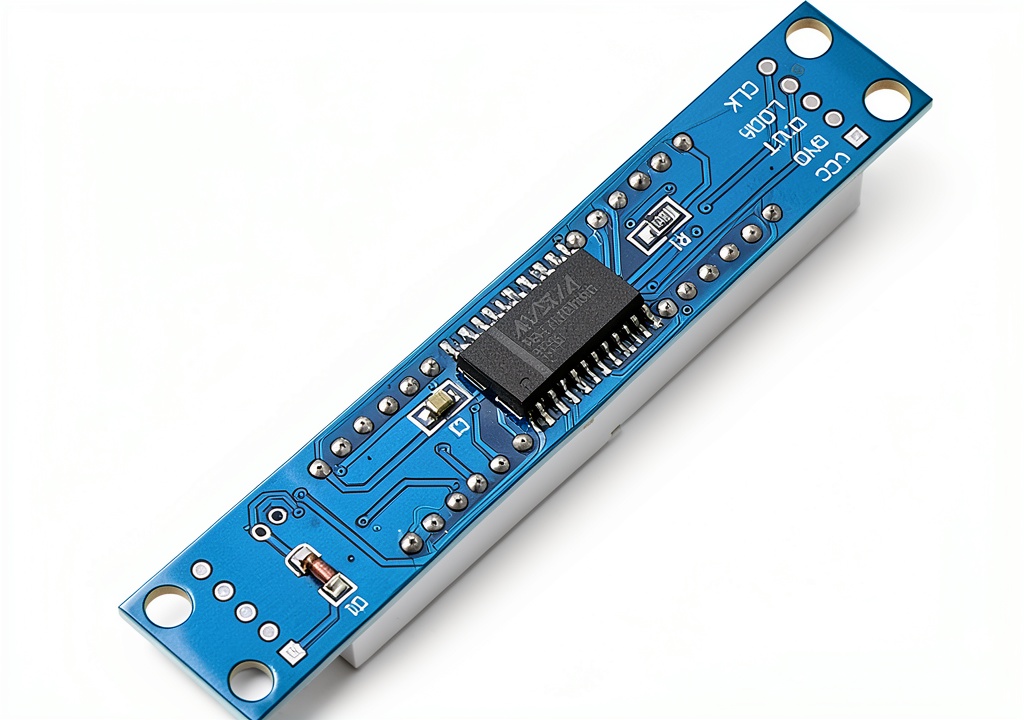
The module’s pinout is intentionally minimal, requiring only three I/O connections—DATA, CLOCK, and LOAD—to control the entire eight‑digit array. This three‑wire serial interface reduces board space and simplifies routing on prototype shields or custom PCBs. The MAX7219 driver handles multiplexing internally, providing flicker‑free illumination at up to 10 mA per segment, while also offering built‑in brightness control and shutdown modes for power‑saving applications. Because the driver includes a built‑in decoder, users can send simple hexadecimal values to render common characters without implementing complex segment mapping logic, accelerating development time and reducing code size.
Reliability is a core focus of the HiLetgo design. The display tubes are fabricated from high‑quality LED segments that meet RoHS standards and are tested for long‑term operation at temperatures ranging from –20 °C to +85 °C. The PCB layout follows best‑practice guidelines to minimize electromagnetic interference, and the module includes protective resistors to guard against voltage spikes that could otherwise damage the MAX7219 chip. With a weight of just 0.915 oz and a compact package measuring 5 × 3.62 × 0.59 inches, the unit can be easily integrated into handheld devices, instrument panels, or portable hobbyist projects, offering durability without sacrificing form factor.
The visual appearance of the display is enhanced by a blue color option that provides a modern aesthetic while maintaining high contrast against dark backgrounds. The module’s dimensions and low profile allow it to be mounted on a variety of enclosure types, and the clear labeling on the PCB assists in rapid prototyping and debugging. Additionally, the product’s ASIN B01D0WSCJA and its strong customer rating of 4.3 out of 5 stars across more than one hundred reviews attest to its popularity and proven performance in the maker community.
Usage
Engineers and hobbyists alike find the MAX7219 display tube ideal for creating digital clocks, countdown timers, and scoreboards where space is at a premium. Its ability to cascade multiple modules enables the construction of longer numeric readouts, such as temperature monitors or voltage meters, without sacrificing readability. The three‑wire interface aligns perfectly with the Arduino Uno’s digital pins, allowing a beginner to wire the display in under five minutes using a breadboard and a few jumper wires. This rapid setup encourages experimentation and accelerates the learning curve for new developers.
In educational settings, the module serves as a hands‑on teaching tool for illustrating concepts such as serial communication, multiplexing, and power management. Students can experiment with varying brightness levels, implement custom animation sequences, or integrate the display into robotics projects that require real‑time status feedback. Because the MAX7219 driver includes a shutdown feature, power‑conscious designs can turn off the display during idle periods, extending battery life for portable applications and demonstrating efficient energy use.
The display’s robust construction also makes it suitable for industrial prototypes where durability and consistent performance are essential. For example, manufacturers can embed the module into equipment panels to show process counts, error codes, or operational timers, benefiting from the driver’s built‑in error detection and fault tolerance. The module’s compatibility with both 5 V and 3.3 V logic ensures seamless integration with a wide range of PLCs and embedded controllers, reducing the need for additional level‑shifting circuitry.
Outdoor hobby projects, such as weather stations or remote monitoring units, can take advantage of the module’s bright LED segments and weather‑resistant housing options. By pairing the display with a low‑power microcontroller and a solar power source, creators can build self‑sustaining devices that report data in real time, all while maintaining a compact footprint that fits within limited enclosure space. The clear visibility of the blue LEDs even under direct sunlight makes the module a reliable choice for field deployments.
Why Choose Us
HiLetgo’s reputation for delivering reliable electronic components is reinforced by rigorous quality control processes that begin at component sourcing and continue through final assembly. Each MAX7219 display tube undergoes functional testing to verify correct segment illumination, proper driver operation, and accurate voltage tolerance before it leaves the factory. This commitment to quality reduces the risk of field failures and provides developers with confidence that their designs will perform as expected, even in demanding environments.
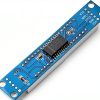
The module’s design emphasizes user‑friendly integration, with clear silk‑screen markings that identify the VCC, GND, DIN, CLK, and CS pins. Comprehensive documentation, including wiring diagrams and example Arduino sketches, is available on the HiLetgo website, enabling users to get started quickly without searching for third‑party resources. Moreover, the open‑source nature of the MAX7219 driver encourages community contributions, ensuring that software libraries remain up‑to‑date and compatible with the latest development environments, which further simplifies the development process.
Customer support is a cornerstone of the HiLetgo experience. Purchasers gain access to a responsive technical assistance team that can help troubleshoot wiring issues, optimize display performance, or advise on cascading multiple modules for larger projects. The company also offers a straightforward return policy and warranty coverage, reflecting confidence in the durability of the product and a commitment to long‑term satisfaction. This level of service distinguishes HiLetgo from many generic component suppliers.
Finally, the competitive pricing of the 2‑piece package—currently listed at $6.99—makes the MAX7219 display tube an economical choice for both large‑scale production runs and small‑batch prototypes. By delivering high‑quality visual output at a low cost, HiLetgo enables innovators to allocate resources toward other critical components, accelerating development timelines and reducing overall project expenses. The combination of affordability, performance, and support creates a compelling value proposition for engineers at every skill level.
Key Features
- Bright blue LED segments provide high visibility in low‑light and daylight conditions
- Only three I/O pins required, simplifying wiring and freeing up microcontroller resources
- Supports both 5 V and 3.3 V logic, ensuring compatibility with a wide range of development boards
- Built‑in brightness control and shutdown mode extend battery life for portable applications
- Comes with dedicated technical support and comprehensive documentation for rapid integration
FAQ
Can I cascade multiple MAX7219 modules together?
Yes, the MAX7219 driver is designed to be daisy‑chained, allowing you to connect several modules in series using the same three‑wire interface. Each additional module adds eight more digits, and the driver automatically handles the multiplexing, so you can create long numeric displays without increasing the number of microcontroller pins.
What is the maximum current per segment and how does it affect brightness?
Each segment can safely draw up to 10 mA, which the MAX7219 regulates internally. Adjusting the driver’s intensity register lets you set the brightness level from low to high, balancing visual clarity against power consumption. For battery‑powered projects, lowering the intensity can significantly extend runtime while still providing adequate legibility.
Is the module safe to use with 3.3 V microcontrollers?
Absolutely. The MAX7219 chip operates correctly with 3.3 V logic levels, and the module’s input pins are tolerant of both 5 V and 3.3 V signals. Just ensure that the supply voltage (VCC) matches the logic level you are using, and avoid connecting the VCC pin to a higher voltage than the microcontroller’s I/O to prevent damage.
How do I update the display without causing flicker?
Flicker is minimized by the MAX7219’s internal multiplexing, but you can further reduce it by updating the display data in a single burst rather than sending individual digit updates. Use the driver’s “shutdown” command to temporarily turn off the display while you load new data, then reactivate it once the transfer is complete. This technique ensures a smooth visual transition.
Reviews
There are no reviews yet.